
Table of Contents
Your Complete Roadmap to Becoming a Web Developer
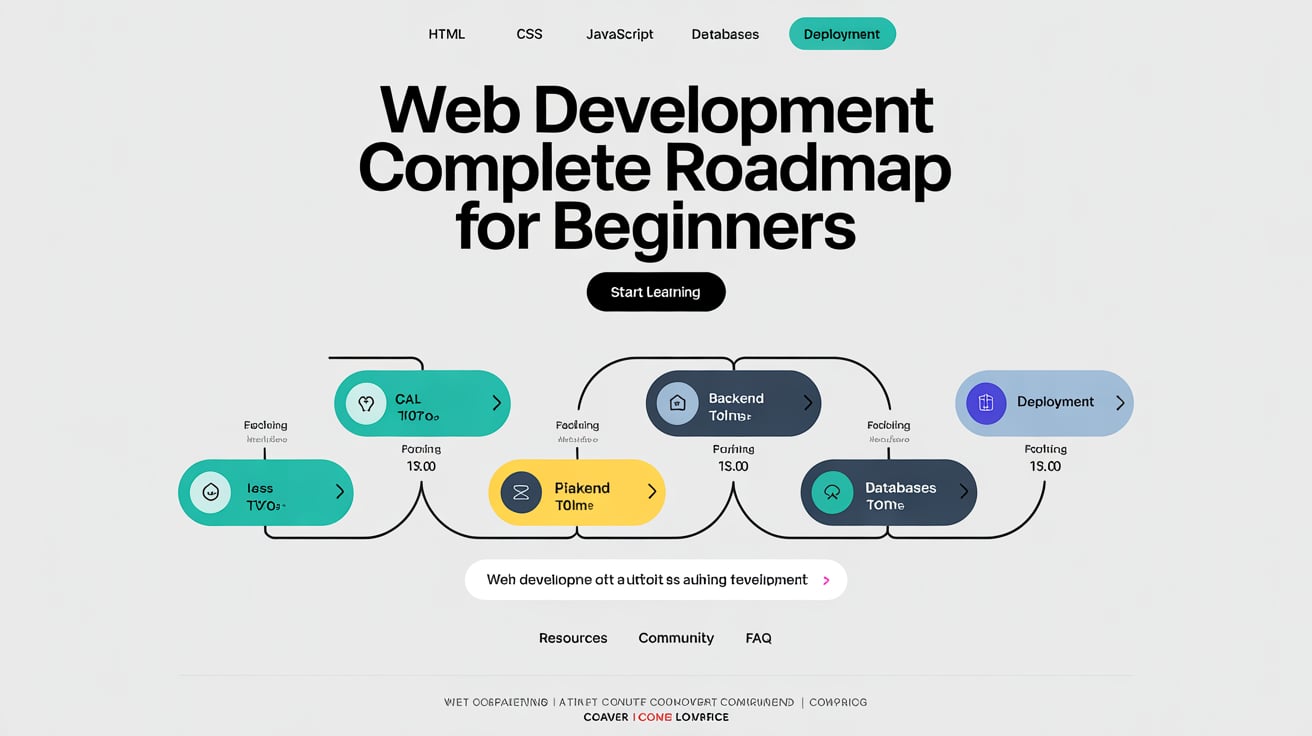
Embarking on the journey of web development can seem daunting, but with a clear roadmap, you can navigate the complexities and build a strong foundation. This guide outlines the essential skills and technologies every aspiring web developer needs, from front-end basics to back-end mastery.
Front-End Essentials
The front end is what users see and interact with. Mastering these core technologies is crucial:
- HTML (HyperText Markup Language): The backbone of any webpage, HTML is used to structure content. Think of it as the skeleton of your website.
- CSS (Cascading Style Sheets): Once you have the structure, CSS comes into play to style your pages, controlling layout, colors, fonts, and overall visual presentation.
- JavaScript: This powerful language adds interactivity and dynamic functionality to your websites. From animations to complex user interfaces, JavaScript makes your web pages come alive.
Beyond the basics, diving into modern libraries and frameworks can significantly boost your efficiency and capabilities:
- React: A popular JavaScript library for building robust and interactive user interfaces, especially for single-page applications.
- Tailwind CSS: A utility-first CSS framework that allows for rapid UI development by providing pre-defined classes for styling.
Back-End Essentials
The back end is the server-side of your application, handling data storage, server logic, and communication with databases.
- Node.js: A popular runtime environment that allows you to run JavaScript on the server-side, making it a powerful choice for building scalable network applications.
- Understanding Internet Protocols: A solid grasp of how the internet works, including concepts like HTTP/HTTPS, SSL, TCP/UDP, is fundamental for effective back-end development. This knowledge helps you understand how data flows and is secured across the web.
Data Management
Every dynamic web application needs a way to store and retrieve data.
- Databases (SQL & NoSQL): Familiarity with both relational (SQL) databases like PostgreSQL or MySQL, and non-relational (NoSQL) databases like MongoDB, is essential for managing user and application data effectively.
Version Control
Collaboration and efficient code management are vital in web development.
- Git & GitHub: Git is a distributed version control system that helps you track changes in your code, revert to previous versions, and collaborate seamlessly with others. GitHub is a web-based platform that uses Git for version control, allowing you to store your code in the cloud and participate in team projects.
Beyond the Basics: Advanced Skills
While not strictly necessary for a beginner, these additional skills can give you a significant edge in the industry:
- Docker: A platform that uses OS-level virtualization to deliver software in packages called containers, making deployment and scaling much more efficient.
- AI Integration: Understanding how to integrate Artificial Intelligence (AI) tools, such as the ChatGPT API, can open up new possibilities for creating intelligent and responsive web applications.
This comprehensive roadmap provides a solid foundation for anyone looking to enter the dynamic world of web development. For practical and industry-focused training, consider exploring programs that emphasize hands-on experience and real-world project development.
How to Apply for Web Development Internship?
Apply here for Web Development Internships, CLICK HERE
Read More: Top 5 Government Job Opportunities in July 2025: Apply Now!
Read More: How to Crack Google Internship Interview in 2025: The Ultimate Guide